Estimated Reading Time: 8 minutes
Most men who come into our Tampa clinic with low testosterone don’t arrive because they’ve been losing in the gym or because their libido disappeared overnight. They arrive because something more subtle and harder to name has shifted. They feel like they’re running on 70 percent. They’re still showing up — to the boat, to the workout, to the job — but the edge is gone. The drive that used to feel automatic now requires effort.
That’s the problem with low testosterone in active men: the signs rarely look like the textbook version. Men who golf three times a week, paddle-board on the bay, or still grind through fifty-hour work weeks don’t expect to have a hormone deficiency. So they don’t look for one. They chalk it up to a bad week, to stress, to getting older. Meanwhile, the underlying cause goes unaddressed for years.
Tampa’s outdoor lifestyle puts men in a unique position. Year-round activity keeps people physically engaged well into their 40s and 50s — which is why hormone decline so often gets mistaken for normal wear and tear. If you’re still doing the things you’ve always done, how could something be wrong?
The answer is that testosterone doesn’t care how active you are. It declines whether you’re sedentary or crossing the finish line of a triathlon. And in active men, the signs often look different — less dramatic, more insidious, and easy to rationalize away.
This article covers what those signs actually look like, why they’re easy to miss, and what physician-led evaluation at LiteWell involves for Tampa men who want answers.
Key Takeaways
- Testosterone declines gradually in men starting in their 30s — active men are not immune.
- In physically active men, low testosterone often presents as subtle performance changes rather than obvious symptoms.
- Fatigue, longer recovery times, mood shifts, and cognitive changes may all be hormonal in origin.
- Diagnosis requires both clinical symptoms and properly timed laboratory evaluation — a single number is not enough.
- The Endocrine Society and American Urological Association recommend individualized evaluation and treatment, not population-wide cutoffs.
- TRT is not appropriate for every man — but for those who qualify, the benefits are well-documented.
- LiteWell’s physician-led approach goes well beyond a testosterone number.
Table of Contents
- What Low Testosterone Actually Is
- The Biology Behind the Decline
- Signs Active Men Overlook
- How Low Testosterone Is Properly Evaluated
- Treatment: What the Evidence Shows
- Myths vs. Facts
- LiteWell’s Clinical Approach
- Hormone Health in Tampa: What We See at LiteWell
- Frequently Asked Questions
- Related LiteWell Services
- Related Conditions Pages
- Related Insights
- References
What Low Testosterone Actually Is
Testosterone is the primary male sex hormone and one of the most physiologically active molecules in the human body. Produced primarily in the Leydig cells of the testes — with a small contribution from the adrenal glands — testosterone influences nearly every organ system: the brain, bones, muscles, cardiovascular system, and metabolic processes.
Male testosterone production typically peaks in early adulthood and begins a gradual, progressive decline of roughly 1 to 2 percent per year after age 30. By the time most men reach their mid-40s, total testosterone may be meaningfully lower than it was in their prime — even if still within the broad “normal” lab range.
Clinically significant testosterone deficiency, sometimes called male hypogonadism, is diagnosed when both of the following are present:
- Symptoms consistent with low testosterone
- Appropriately timed blood tests confirming low levels
This distinction matters enormously. A lab number alone does not make the diagnosis. Many men with testosterone in the low-normal range experience significant symptoms. Others with lower numbers feel fine. Treatment decisions should always account for both sides of that equation.
The Endocrine Society defines hypogonadism as consistently low testosterone in conjunction with signs and symptoms — not a threshold number in isolation. The American Urological Association (AUA) similarly emphasizes that clinical context, not a single cutoff, guides appropriate treatment.
At LiteWell, we read the whole picture — not just one data point.
The Biology Behind the Decline
Understanding why testosterone declines — and why it often accelerates — helps explain why some men feel the effects sooner than others.
The system that regulates testosterone production is called the hypothalamic-pituitary-gonadal (HPG) axis. The hypothalamus releases gonadotropin-releasing hormone (GnRH) in pulses, which signals the pituitary gland to secrete luteinizing hormone (LH) and follicle-stimulating hormone (FSH). LH then travels to the testes and stimulates testosterone production.
When testosterone levels are adequate, the hypothalamus and pituitary reduce their output — a feedback loop that keeps the system in balance. As men age, several factors disrupt this balance:
- Reduced testicular sensitivity to LH signals
- Decreased pituitary pulsatility of GnRH and LH
- Rising SHBG (sex hormone-binding globulin), which binds testosterone and reduces the bioavailable fraction
- Increased aromatase activity, converting testosterone to estradiol — particularly in men with higher body fat
- Chronic sleep disruption, which impairs the nocturnal testosterone surge
- Insulin resistance and metabolic dysfunction, which independently suppress the HPG axis
In active men, training volume itself can occasionally suppress testosterone — particularly when overtraining, caloric restriction, or elevated cortisol are involved. This adds another layer of complexity that standard primary care labs often miss entirely.
The result is a hormone environment that may look acceptable on paper but feel significantly suboptimal in daily life.
Signs Active Men Overlook
Active men tend to normalize symptoms that others might take more seriously. If you’re still working out and you’re tired, you assume it’s the workout. If your mood is off, you blame work. If your recovery is slower, you assume you’re just getting older. This rationalization pattern is exactly why low testosterone goes undetected in some of the healthiest-looking men.
Recovery That Takes Longer Than It Should
One of the earliest and most commonly missed signs is prolonged recovery from exercise. Testosterone plays a central role in muscle protein synthesis and tissue repair. When levels fall, the body’s ability to rebuild after training slows — not dramatically, but noticeably. Men describe needing an extra day before they feel ready to train again, or feeling sore in ways that don’t quite match the workout they did. Strength plateaus are common even when training consistency hasn’t changed.
Energy That Isn’t Quite Right
This rarely presents as crushing fatigue. More often, it’s a quality of energy that feels diminished — lower ceiling, less sustained. Men describe it as starting the day feeling like they’ve already spent something, or hitting a wall in the afternoon that didn’t used to be there. Caffeine manages it, activity distracts from it, but the underlying drain doesn’t resolve with a good night’s sleep.
Motivational and Mood Changes
Testosterone has significant effects on the brain — particularly on dopaminergic pathways involved in motivation, goal-directed behavior, and emotional regulation. Men with declining testosterone often notice that drive and initiative feel dulled. Projects that used to generate excitement feel neutral. Irritability or low-grade frustration may be present without a clear cause. This is frequently attributed to stress or work demands when the origin is hormonal.
Cognitive Changes
Some men describe a cognitive quality they struggle to name — slower word retrieval, difficulty sustaining focus, or a general mental haziness that comes and goes. Brain fog of this type may have multiple contributors, but testosterone is one of the more common hormonal drivers in men over 40. The link between testosterone and cognitive function is well-documented in research from the National Institutes of Health and others.
Body Composition Shifts
Testosterone supports lean mass and metabolic efficiency. Men with falling levels often notice that their body composition changes even when diet and exercise haven’t. They hold more fat in the abdomen, lose definition they used to maintain easily, and find that building muscle requires considerably more effort for diminishing returns. This is a metabolic consequence of hormone decline, not a lifestyle failure.
Sexual Health Changes
Reduced libido is among the most recognized symptoms, but it often appears later and more subtly than men expect — a gradual fade rather than a sudden loss. Changes in erection quality, particularly morning erections, may also reflect declining testosterone levels. These symptoms may be present alongside the others listed above or independently.
How Low Testosterone Is Properly Evaluated
A proper evaluation for testosterone deficiency is more involved than a single blood draw at an urgent care clinic. Several factors determine whether a lab value is accurate and clinically meaningful.
Timing matters. Testosterone follows a circadian rhythm, peaking in the morning between 7:00 and 10:00 AM. Blood should always be drawn in this window — ideally fasting or with minimal food — for results that accurately reflect peak production.
Multiple measurements are needed. A single low result should be confirmed with a second test on a separate morning. Temporary illness, poor sleep, extreme exercise, or acute stress can all transiently suppress testosterone without indicating true deficiency.
The full panel matters. Total testosterone alone tells an incomplete story. At LiteWell, we evaluate:
- Total testosterone
- Free testosterone (calculated or direct)
- SHBG (sex hormone-binding globulin)
- Luteinizing hormone (LH) and FSH — to distinguish primary from secondary hypogonadism
- Estradiol
- Complete blood count (CBC)
- Comprehensive metabolic panel
- PSA (in appropriate candidates)
- Thyroid function
- Prolactin (when indicated)
Interpreting these numbers in the context of symptoms — rather than relying solely on lab reference ranges — is what distinguishes a thorough hormone evaluation from a checkbox lab order.
Treatment: What the Evidence Shows
Testosterone replacement therapy (TRT) has been studied extensively over the past several decades. For men who genuinely qualify — symptomatic, with consistently confirmed low levels, and no contraindications — the evidence supporting treatment is substantial.
The Testosterone Trials, a large federally funded series of studies published in the New England Journal of Medicine and associated journals, demonstrated improvements in sexual function, mood, bone density, and physical capacity in older men with confirmed low testosterone. The AUA and Endocrine Society guidelines support TRT for appropriately selected men with symptomatic hypogonadism.
Regarding cardiovascular safety — a historically debated topic — the TRAVERSE Trial (2023), the largest placebo-controlled cardiovascular outcomes trial of TRT to date, found no increase in major adverse cardiovascular events in men with existing or high-risk cardiovascular disease treated with testosterone. This was a significant development in the evidence base.
Delivery methods include:
- Intramuscular injections (testosterone cypionate or enanthate) — weekly or twice-weekly; the most common protocol at LiteWell
- Subcutaneous injections — smaller gauge, favored by some patients for ease
- Topical gels and creams — convenient but with transfer and absorption variability
- Pellet implants — long-acting, inserted subcutaneously, every 3–6 months
Treatment decisions are individualized. Response varies, and ongoing lab monitoring is essential. At LiteWell, every patient on TRT receives regular follow-up labs including hematocrit, PSA, and estradiol — not because problems are expected, but because physician-supervised therapy is what makes TRT safe.
Myths vs. Facts
Myth: If you’re still active and fit, you can’t have low testosterone.
Fact: Physical activity does not prevent testosterone decline. Active men experience hypogonadism at similar rates to sedentary men and often present with subtler, harder-to-recognize symptoms.
Myth: TRT causes prostate cancer.
Fact: Current evidence does not support a causal link between TRT and prostate cancer initiation. The Endocrine Society and AUA note that TRT is contraindicated in men with active or suspected prostate cancer, but does not cause cancer in men without it.
Myth: Low testosterone is just part of normal aging — there’s nothing to do about it.
Fact: While some testosterone decline is expected with age, symptomatic deficiency is a diagnosable and treatable condition. Accepting significant symptoms as inevitable aging is not evidence-based.
Myth: TRT will make you aggressive or emotionally volatile.
Fact: Physiological testosterone replacement — maintaining levels within a normal range — does not cause behavioral changes of this kind. Many men report improved mood stability and emotional regulation on appropriate TRT.
Myth: You only need to check testosterone once.
Fact: Proper evaluation requires at least two morning measurements on separate days, along with a complete panel. Single-point testing without symptom context is insufficient for diagnosis.
Myth: TRT is just for older men.
Fact: Testosterone deficiency can occur at any age. Men in their 30s and early 40s are increasingly evaluated and treated — particularly when secondary causes like obesity, sleep apnea, or medications are contributing.
LiteWell’s Clinical Approach
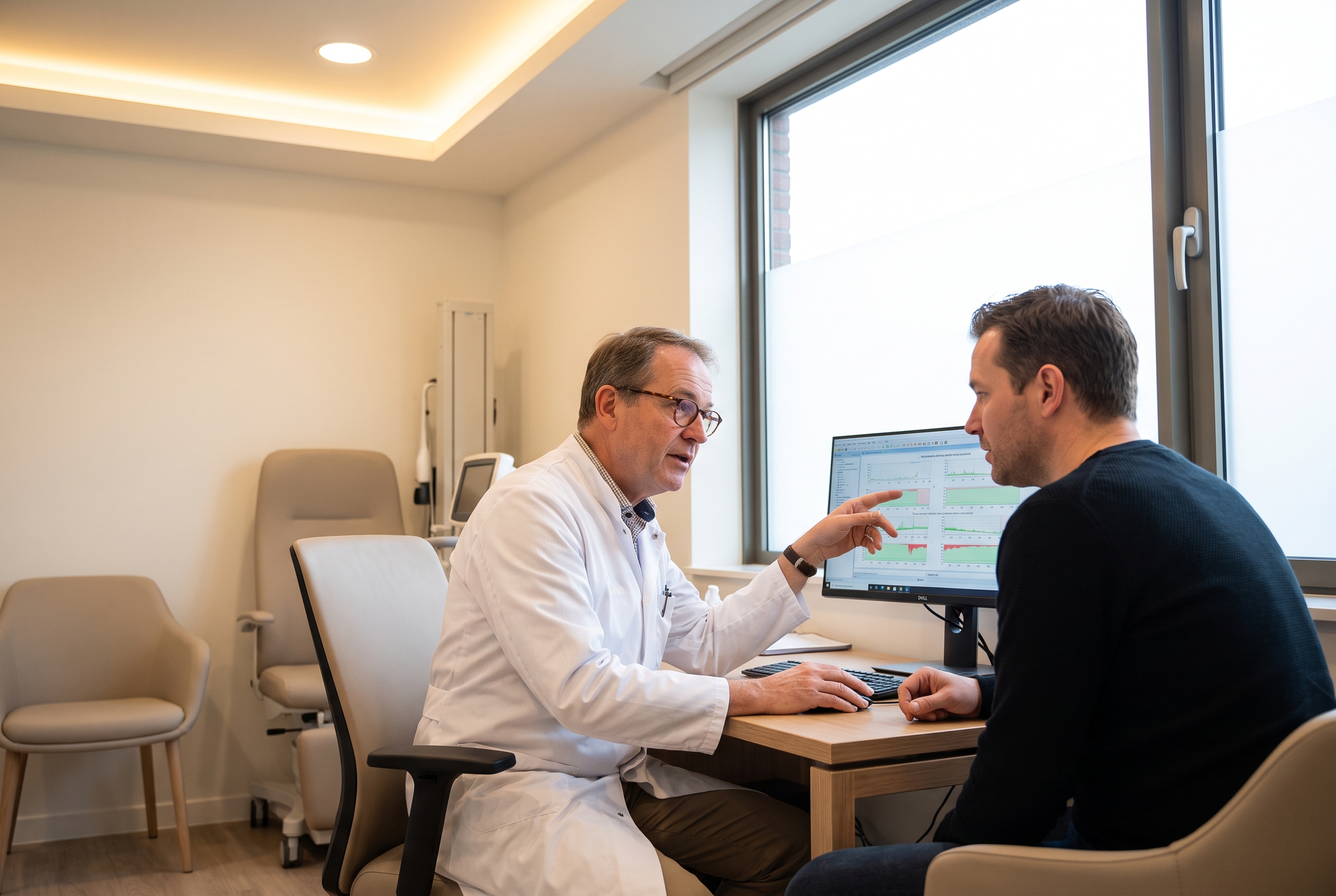
LiteWell is a physician-led hormone health and metabolic wellness practice — not a supplement shop, not a testosterone mill, and not a one-size-fits-all men’s health clinic. Every patient who comes through our doors in Tampa is evaluated by a physician who reviews their full medical history, symptoms, and laboratory results before any treatment recommendation is made.
Our starting point is always the Free Medical Fit Call — a no-pressure conversation with a member of our clinical team to understand your concerns, determine whether you may be a candidate for evaluation, and explain what the process looks like. There’s no obligation, and there’s no prescription at the end of a phone call. We earn your trust through the quality of the evaluation, not through speed.
For men who proceed to a full evaluation, our Premier Discovery Intake involves a comprehensive review of labs, health history, and symptoms with a licensed physician. We don’t treat numbers — we treat people. That means understanding how you feel, what your goals are, and what other factors may be contributing to your symptoms before we discuss any intervention.
If TRT is appropriate, we manage it with ongoing lab monitoring and physician oversight. If something other than testosterone is driving your symptoms — thyroid dysfunction, sleep apnea, metabolic disease, or elevated cortisol — we’ll help identify that too. The goal is answers, not just prescriptions.
For men in Tampa and the broader Tampa Bay area, our clinic at 2510 S MacDill Ave offers in-person evaluation as well as hybrid care options for those who prefer telemedicine follow-up once treatment is established.
Learn more about our TRT for Men program or explore our cornerstone resource: Low Testosterone: Symptoms, Causes, Evaluation, and Evidence-Based Treatment.
Hormone Health in Tampa: What We See at LiteWell
Tampa’s hot, humid climate and year-round outdoor lifestyle — boating, beach, and water sports — create a health-conscious but often hormonally undertreated population. The active adult and retiree demographic around our South MacDill Ave clinic frequently attributes fatigue and declining performance to aging when both are addressable with proper physician-led evaluation. Men who are still doing the things they love tend to wait longer before seeking answers — which is exactly why we built a practice that meets them where they are.
Frequently Asked Questions
What is the normal testosterone range for men?
Lab reference ranges for total testosterone typically span 300 to 1,000 ng/dL, but these ranges vary between laboratories and reflect the general population — not necessarily optimal levels. A man at 310 ng/dL may be within the reference range but still experience significant symptoms. LiteWell evaluates both free and total testosterone in the context of symptoms, not against a population average.
How do I know if my symptoms are from low testosterone or something else?
That’s exactly the right question — and it requires a thorough evaluation to answer. Fatigue, mood changes, and reduced drive can have multiple causes: thyroid dysfunction, sleep apnea, depression, metabolic disease, medications, or hormonal imbalance. A proper workup rules out contributing factors rather than assuming testosterone is the culprit. LiteWell’s physician-led evaluation is designed to find the actual source, not just the easiest answer.
Can I have normal testosterone levels but still have symptoms?
Yes. Some men experience symptoms of testosterone deficiency with levels in the low-normal range, particularly when free testosterone is low due to elevated SHBG. Lab reference ranges reflect a broad population, and individual responses to hormone levels vary. This is why symptoms matter as much as numbers — and why a physician who listens is essential to the evaluation process.
Does exercise boost testosterone?
Resistance training and high-intensity exercise can acutely elevate testosterone and may support healthier baseline levels over time. However, exercise does not prevent age-related testosterone decline, and excessive training volume combined with inadequate recovery and caloric restriction can actually suppress the HPG axis. Exercise is an important part of overall hormone health — but it is not a substitute for evaluation when symptoms are present.
Is TRT safe for men with cardiovascular risk factors?
The TRAVERSE Trial (2023), the largest cardiovascular outcomes study of TRT conducted to date, found no increase in major adverse cardiovascular events in men with existing or elevated cardiovascular risk who received testosterone therapy. This does not mean TRT is appropriate for everyone — individual cardiovascular history, hematocrit levels, and other risk factors must be considered. LiteWell evaluates cardiovascular risk as part of the standard workup before initiating any treatment.
How long before I feel results from TRT?
The timeline varies. Some men notice improvements in energy and mood within the first few weeks. Libido and sexual function often improve within six to twelve weeks. Changes in body composition, muscle mass, and bone density take longer — typically three to six months or more. The Endocrine Society recommends evaluating symptomatic response at three and six months after initiating therapy. Individual responses vary, and dose adjustments are common during the early phase of treatment.
Will TRT affect my fertility?
Yes — exogenous testosterone suppresses the body’s natural LH signal, which reduces sperm production. For men who may want to father children in the future, this is a critical conversation to have before starting TRT. Alternatives that preserve fertility — such as human chorionic gonadotropin (HCG) or clomiphene citrate — may be appropriate depending on your circumstances. LiteWell discusses fertility implications with every man of reproductive age before treatment begins.
What labs do I need before starting TRT?
At minimum, two morning testosterone measurements on separate days, along with LH, FSH, SHBG, estradiol, CBC, and a comprehensive metabolic panel. PSA is recommended for men over 40. Thyroid function and prolactin may be added depending on clinical context. These labs establish a baseline, confirm the diagnosis, and screen for contraindications. Skipping this step is not something LiteWell does — comprehensive baseline labs are non-negotiable before any treatment recommendation.
Can I stop TRT if I change my mind?
Yes. TRT is not a permanent commitment. If you choose to discontinue, your natural testosterone production will typically resume over time — though the timeline varies and may be slower in older men or after longer treatment durations. Some men work with their physician to taper gradually. Fertility recovery after stopping TRT is possible but not guaranteed, particularly after extended therapy. This is another reason to have a thorough conversation before starting.
Does TRT cause hair loss?
TRT can accelerate androgenetic hair loss in men who are genetically predisposed to it — because some testosterone converts to dihydrotestosterone (DHT), which affects hair follicles. It does not cause hair loss in men without that genetic predisposition. If hair loss is a concern, it’s worth discussing before starting TRT so expectations are accurate and, if applicable, preventive options can be considered.
What makes LiteWell different from an online TRT clinic?
The primary differences are physician involvement, evaluation depth, and ongoing monitoring. Many online TRT services provide prescriptions with minimal clinical evaluation and limited follow-up. At LiteWell, every patient is evaluated by a licensed physician, labs are reviewed in the context of symptoms, treatment plans are individualized, and follow-up monitoring is built into the protocol — not offered as an optional add-on. That level of care matters for both safety and outcomes.
Do I have to come in person to the Tampa clinic?
Not necessarily. LiteWell offers a hybrid care model — initial evaluation and certain follow-ups may be conducted in person at our 2510 S MacDill Ave Tampa location, while ongoing monitoring and follow-up appointments can often be handled via telemedicine once your care is established. We’ll discuss what makes sense for your situation during the initial consultation.
Related LiteWell Services
- TRT for Men
- HRT for Women
- Medical Weight Loss
- Longevity & Performance
- Premier Discovery Intake
- Free Medical Fit Call
Related Conditions Pages
Related Insights
- TRT in Tampa: Why Florida Men Are Taking Testosterone Health Seriously
- Low Testosterone in Scottsdale: The Signs Active Men Often Overlook
- Morning Testosterone Draw: Why Timing Your Labs Matters
- Primary vs. Secondary Hypogonadism: What the Difference Means for Treatment
- HCG and TRT: Why Fertility Counseling Matters at Any Age
References
- Endocrine Society Clinical Practice Guideline: Testosterone Therapy in Men with Hypogonadism (2018)
- American Urological Association (AUA): Evaluation and Management of Testosterone Deficiency (2018, updated 2022)
- Lincoff AM, et al. Cardiovascular Safety of Testosterone-Replacement Therapy. New England Journal of Medicine. 2023 (TRAVERSE Trial)
- Bhasin S, et al. Testosterone Trials: Effects in Older Men with Low Testosterone. New England Journal of Medicine. 2016.
- National Institutes of Health (NIH): Testosterone and Aging
- U.S. Food and Drug Administration (FDA): Testosterone Products Drug Safety Communication
Medical Disclaimer
This article is intended for educational purposes only and should not be interpreted as personalized medical advice. Medical decisions should be made in consultation with a licensed healthcare professional who is familiar with your medical history. Treatment plans are individualized, and results vary. LiteWell does not provide emergency medical care.
Medication & Regulatory Disclosure
Testosterone replacement therapy (TRT) requires a valid prescription from a licensed physician. Testosterone products are FDA-regulated controlled substances. LiteWell prescribes only FDA-approved testosterone preparations or, when clinically appropriate, compounded formulations prepared by licensed compounding pharmacies. Compounded testosterone is not FDA-approved as a finished drug product. All prescribing decisions are individualized and made by a licensed physician based on clinical evaluation, laboratory findings, and patient-specific factors. Results and treatment responses vary among individuals.