Medically Reviewed by Kyle Kingsley, MD, Medical Director, LiteWell — September 2, 2026
GLP-1 receptor agonists like semaglutide and tirzepatide are powerful tools for weight loss — but they are not passive medications. If you start one of these drugs and simply go on living the way you always have, expecting the medication to do all the work, you will lose weight in a way that damages your body. Up to 40% of the weight lost on GLP-1 medications can come from lean muscle mass, not fat — and that silent muscle loss sets you up for metabolic dysfunction, frailty, and weight regain the moment you stop. The rules change the moment you start a GLP-1. You have to change with them.
Why GLP-1 Medications Change the Rules
GLP-1 receptor agonists suppress appetite aggressively. That’s the mechanism — and it works. You eat significantly less, often 30–50% fewer calories than before. For many patients, that appetite suppression feels effortless at first. The scale moves. The clothes fit differently. It feels like the hard part is over.
It isn’t.
When the body faces a significant caloric deficit — especially one that arrives quickly, the way GLP-1-driven appetite suppression creates — it doesn’t just burn fat. It burns everything available for fuel. Without the right inputs, it will cannibalize your muscle tissue to meet its energy demands. This is called muscle catabolism, and it’s a well-documented consequence of rapid, unmanaged caloric restriction.
GLP-1 medications are not magic. They are a powerful lever that shifts caloric intake dramatically. What you do on the other side of that lever — how you train, how you eat, how closely you’re monitored — determines whether you come out of this process leaner and stronger, or lighter and metabolically worse off.
At LiteWell’s medical weight loss program, we treat GLP-1 therapy as the beginning of a clinical protocol, not a standalone prescription. Here’s why.
The Muscle Loss Problem No One Warns You About
Most patients are warned about nausea, constipation, and injection site reactions. Very few are warned about the thing that matters most long-term: muscle loss.
Research published in The New England Journal of Medicine and supported by subsequent body composition studies has consistently shown that individuals on GLP-1 medications — without structured resistance training and adequate protein — lose a significant proportion of their weight from lean mass. In some studies, lean mass loss accounts for 25–39% of total weight lost.
Why does this matter? Because muscle is your metabolic engine. Muscle tissue is metabolically active — it burns calories at rest, regulates glucose uptake, and supports hormonal balance. Losing muscle while on a GLP-1 means:
- Your resting metabolic rate drops
- Insulin sensitivity decreases
- Physical strength and function decline
- The risk of weight regain after stopping the medication skyrockets
This is the trap many GLP-1 patients fall into: they lose 30 pounds, feel great, stop the medication — and gain it all back within 12–18 months, often with less muscle than they started with. The medication didn’t fail them. The protocol failed them.
Why Resistance Training Is Non-Negotiable
Let’s be direct: walking more is not enough. Yoga is not enough. Light cardio is not enough. If you are on a GLP-1 medication and losing weight rapidly, you need to be doing resistance training — real, progressive, load-bearing exercise that challenges your muscles to adapt and grow.
Resistance training sends an anabolic signal to your body. It says: these muscles are being used, they need to be preserved, rebuild them stronger. Without that signal, your body has no reason to spare muscle tissue when it’s hunting for fuel in a caloric deficit.
What counts as resistance training?
- Free weights (dumbbells, barbells, kettlebells)
- Weight machines
- Resistance bands — if the load is genuinely challenging
- Bodyweight movements at high enough intensity (think pull-ups, pistol squats — not casual stretching)
The minimum effective dose is 2–3 sessions per week, covering all major muscle groups: legs, back, chest, shoulders, arms, core. Each session should include progressive overload — meaning you’re regularly pushing toward your current limit, not just going through the motions with weight you could lift for 50 reps.
If you’ve never lifted before, now is the time to learn. The investment you make in muscle during your GLP-1 therapy will determine your quality of life for decades. This is not optional. This is the work.
Our longevity and performance program pairs GLP-1 therapy with structured strength guidance for exactly this reason.
Protein: Your Muscle’s Only Defense
Resistance training creates the signal to preserve muscle. Protein provides the raw materials to actually build and maintain it. Without adequate protein intake, even the best training program cannot prevent muscle loss under caloric restriction.
The research is clear on target intake for patients on GLP-1 medications in a caloric deficit: 1.2 to 1.6 grams of protein per kilogram of body weight per day, with many sports medicine and obesity medicine physicians recommending up to 1.8–2.0 g/kg for older patients or those doing intensive training. For a 200-pound (91 kg) person, that’s 109–164 grams of protein daily — minimum.
Here’s the challenge: GLP-1 medications suppress appetite dramatically. Patients often struggle to eat enough of anything, let alone hit protein targets. This is where intentionality becomes critical:
- Prioritize protein at every meal — eat it first, before vegetables or carbohydrates fill you up
- Choose high-quality sources: eggs, chicken, turkey, fish, Greek yogurt, cottage cheese, lean beef, legumes
- Consider protein supplementation — whey or casein protein shakes, or plant-based blends, can help bridge gaps when appetite is low
- Time protein around workouts — consuming 20–40g of protein within 1–2 hours of resistance training enhances muscle protein synthesis
If you’re eating 800–1,200 calories per day (common on GLP-1 medications), those calories need to be working hard. Protein should be the non-negotiable foundation of every meal.
The Role of DEXA Scans: Seeing What the Scale Can’t Tell You
The bathroom scale is one of the most misleading tools in weight management. It tells you total weight — but it cannot distinguish between fat, muscle, water, and bone. A patient can lose 20 pounds on a GLP-1 and look great by scale — while quietly losing 8 pounds of muscle and only 12 pounds of fat. That’s not a successful outcome. That’s a metabolic setback disguised as progress.
DEXA (dual-energy X-ray absorptiometry) scans solve this problem. A DEXA scan provides a precise, segmented breakdown of your body composition:
- Total fat mass and percentage
- Lean muscle mass (total and by body region)
- Visceral adipose tissue (the dangerous fat around organs)
- Bone mineral density
For GLP-1 patients, we recommend a baseline DEXA scan before starting therapy, and follow-up scans every 3–6 months throughout treatment. This gives us the data we need to:
- Establish your true starting body composition
- Catch muscle loss early — before it becomes significant
- Adjust training intensity, protein targets, and medication dosing accordingly
- Celebrate real progress: fat loss with muscle preservation, not just weight loss
DEXA scans are the gold standard for body composition assessment, endorsed by organizations including the Endocrine Society. They’re low-radiation, non-invasive, and take less than 15 minutes. There is no better tool for tracking what’s actually happening inside your body during weight loss.
At LiteWell, DEXA scanning is integrated into our GLP-1 protocols precisely because we want to know — and so should you — whether the weight coming off is fat or muscle.
Close Clinical Monitoring: What That Actually Looks Like
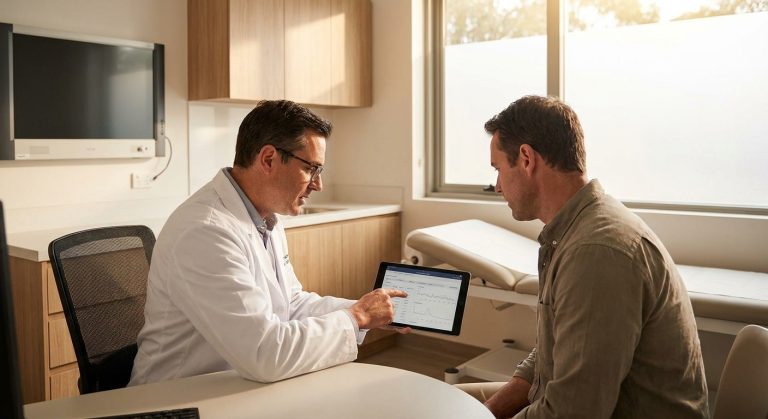
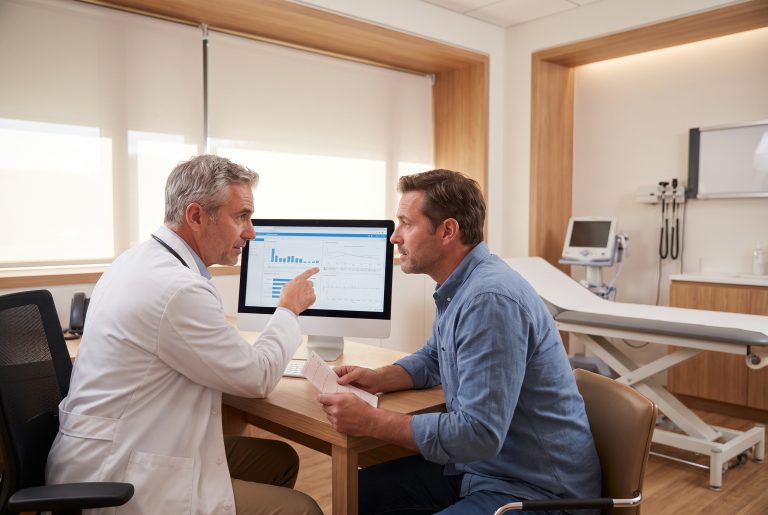
Starting a GLP-1 medication without ongoing clinical oversight is not weight loss medicine. It’s a prescription gamble. Real GLP-1 care is active, iterative, and data-driven.
Here’s what close clinical monitoring actually looks like in our program:
Laboratory Work
Baseline and periodic labs including a comprehensive metabolic panel, lipid panel, HbA1c, thyroid function, and kidney function. GLP-1 medications affect multiple organ systems. This can be important in some patients.
Regular Check-Ins
Monthly provider visits during the active weight loss phase — not annual checkups. We need to know how you’re tolerating the medication, whether appetite suppression is affecting nutritional adequacy, and whether dose adjustments are indicated.
Body Composition Tracking
DEXA scans at baseline and follow-up intervals, as described above. Weight alone doesn’t tell the story we need to act on.
Dose Optimization
GLP-1 medications are not one-size-fits-all. Titration schedules, dose ceilings, and medication selection (semaglutide vs. tirzepatide vs. others) depend on individual response, tolerability, and goals. We adjust — and we document why.
Behavioral and Nutritional Support
Protein targets, training guidance, sleep optimization, and stress management are all part of the clinical picture. Hormones, cortisol, and sleep quality affect weight loss outcomes and muscle preservation. We look at all of it.
If your GLP-1 provider isn’t doing most of these things, you deserve a higher level of care.
The Bottom Line
GLP-1 medications are among the most effective weight loss tools in the history of medicine — but they are tools, not solutions. Starting one without resistance training, without adequate protein, without body composition monitoring, and without close clinical oversight is a recipe for losing the wrong weight and setting yourself up for long-term metabolic harm.
You cannot just start a GLP-1 and go on living like usual. But with the right protocol — one that treats your muscle as the asset it is — GLP-1 therapy can be genuinely transformative.
That’s what we build at LiteWell. If you’re ready to do this right, book a free medical fit call and let’s build your protocol together.
Book a free medical fit call with the LiteWell team — no commitment, just a real conversation about your goals and what a clinical GLP-1 protocol actually looks like.
Frequently Asked Questions
Will I definitely lose muscle on a GLP-1 medication?
Not necessarily — but without intentional resistance training and adequate protein intake, significant muscle loss is a real and well-documented risk. Studies show that 25–39% of weight lost on GLP-1 medications can come from lean mass in patients who don’t follow a structured protocol. The good news: this is largely preventable with the right approach.
How much protein do I need while on semaglutide or tirzepatide?
The general recommendation for patients on GLP-1 medications in a caloric deficit is 1.2–1.6 grams of protein per kilogram of body weight per day. For a 180-pound person, that’s roughly 98–131 grams of protein daily. Some physicians recommend up to 2.0 g/kg for older adults or those doing intensive resistance training. Prioritize protein at every meal.
What kind of exercise is best while on a GLP-1?
Resistance training is the priority — not just cardio. Free weights, machines, resistance bands, and challenging bodyweight exercises all count. Aim for 2–3 sessions per week covering all major muscle groups, with progressive overload over time. Cardio can complement your program but should not replace strength training during active weight loss on a GLP-1.
What is a DEXA scan and do I really need one?
A DEXA (dual-energy X-ray absorptiometry) scan is a low-radiation imaging study that precisely measures your body composition: fat mass, lean muscle mass, visceral fat, and bone density. The scale cannot tell you whether you’re losing fat or muscle. A DEXA scan can. We consider it the gold standard for monitoring GLP-1 outcomes and recommend baseline and follow-up scans every 3–6 months during therapy.
Can I do a DEXA scan at LiteWell?
Yes. DEXA body composition scanning is integrated into our medical weight loss program. We use it to establish your baseline, track progress, catch muscle loss early, and adjust your protocol accordingly. Ask your provider about scheduling one at the start of your GLP-1 journey.
What happens if I stop my GLP-1 medication?
If you stop a GLP-1 medication without having built lean muscle mass and sustainable habits, weight regain is very likely. Studies show most patients regain the majority of lost weight within 12–18 months of discontinuation. The antidote is building muscle, establishing a high-protein diet, and developing metabolic resilience during therapy — so your body has something to sustain it when the medication ends.
How often should I have labs checked while on a GLP-1?
At minimum, baseline labs before starting and follow-up labs every 3–6 months during active therapy. This typically includes a comprehensive metabolic panel, lipid panel, HbA1c, thyroid function, and kidney function. Your provider may monitor more frequently depending on your health status and medication dose. Never start a GLP-1 without baseline bloodwork.
Is it safe to do resistance training while on a GLP-1?
Yes — and not just safe, it’s essential. Resistance training is one of the safest and most evidence-based interventions for preserving muscle during caloric restriction. The main caveat for GLP-1 patients is fueling adequately around workouts, particularly protein intake. If appetite suppression makes it hard to eat before training, work with your provider to find strategies that support both your caloric needs and your training performance.
Can I combine GLP-1 therapy with LiteWell’s longevity program?
Absolutely — and we’d argue it’s the ideal combination. Our longevity and performance program addresses the exact biological levers — muscle mass, metabolic health, hormone optimization, and body composition — that make GLP-1 therapy sustainable and transformative long-term. Many of our patients integrate both.
How do I know if my GLP-1 protocol is working the way it should?
Progress should be measured in body composition, not just scale weight. You should be losing predominantly fat while preserving or even building lean muscle. Strength should be maintained or improving. Energy levels should be stable. Labs should reflect metabolic improvement. If you’re losing weight rapidly but feeling weak, fatigued, or haven’t had body composition tracking, it’s time to talk to a physician who specializes in this. Book a fit call with LiteWell to get a second opinion on your protocol.