For much of modern medicine, success was measured by one number: how long someone lived.
Today, a different question is becoming increasingly important: “How well do you live during those years?”
Most people would gladly accept living to 90 years old. Far fewer would choose to spend the final 20 years of life limited by frailty, chronic disease, disability, cognitive decline, and loss of independence.
This distinction has given rise to the concept of healthspan — the years of life spent in good physical, cognitive, emotional, and functional health.
At LiteWell, we believe extending healthspan — not simply lifespan — should become one of the primary goals of modern medicine. Rather than waiting for chronic disease to develop, longevity medicine emphasizes identifying risk earlier, optimizing physiology, preserving function, and helping people remain healthy, active, independent, and mentally sharp for decades.
The objective is not immortality. The objective is maximizing the quality of the years we have.
Key Takeaways
- Longevity medicine focuses on extending healthspan rather than simply increasing lifespan.
- Healthy aging is influenced by lifestyle, genetics, environment, sleep, nutrition, exercise, metabolic health, and preventive medical care.
- Muscle mass, cardiovascular fitness, metabolic health, cognitive health, and emotional well-being are among the strongest predictors of healthy aging.
- Small improvements maintained consistently over decades often produce greater benefits than short-term intensive interventions.
- Physician-guided longevity programs emphasize prevention, early detection, and individualized optimization rather than reactive disease management.
Table of Contents
- What Is Longevity Medicine?
- Healthspan vs. Lifespan
- The Biology of Aging
- Hallmarks of Aging
- Muscle: One of the Strongest Predictors of Healthy Aging
- Metabolic Health and Longevity
- Cardiovascular Health
- Cognitive Health
- Evidence-Based Strategies for Healthy Aging
- Frequently Asked Questions
- LiteWell’s Clinical Perspective
- References
What Is Longevity Medicine?
Longevity medicine is an evolving field focused on helping people remain healthier for longer. Rather than waiting until disease develops, longevity medicine emphasizes prevention, risk reduction, early intervention, lifestyle optimization, evidence-based medical care, and preserving physical and cognitive function.
It draws from multiple disciplines, including internal medicine, preventive medicine, exercise physiology, nutrition science, endocrinology, obesity medicine, cardiovascular medicine, sleep medicine, and behavioral medicine.
At LiteWell, longevity medicine is not about pursuing experimental therapies without evidence. It is about applying current scientific knowledge to optimize long-term health while recognizing that recommendations evolve as research advances.
Healthspan vs. Lifespan
Although often used interchangeably, these terms describe different concepts.
Lifespan refers to the total number of years a person lives. Healthspan refers to the number of years lived in good health without major disability, frailty, or loss of independence.
Imagine two individuals who both live to age 90. One remains physically active, mentally sharp, and independent until late in life. The other develops multiple chronic diseases in their 60s and spends decades with declining function. Their lifespans are identical. Their healthspans are dramatically different.
Longevity medicine seeks to maximize both — but places particular emphasis on healthspan.
The Biology of Aging
Aging is a natural biological process that affects every organ system. Over time, cells gradually accumulate damage resulting from normal metabolism, environmental exposures, chronic inflammation, oxidative stress, DNA damage, hormonal changes, and lifestyle factors.
Although aging cannot currently be stopped, evidence suggests that many aspects of biological aging may be influenced through healthy lifestyle habits and preventive medical care.
Importantly, biological age does not always match chronological age. Some individuals remain remarkably healthy into their 80s. Others develop multiple chronic diseases decades earlier. The difference reflects the interaction of genetics, lifestyle, environment, and medical care.
The Hallmarks of Aging
Researchers have identified several biological processes that contribute to aging, commonly referred to as the hallmarks of aging. Major hallmarks include:
- Genomic instability
- Telomere attrition
- Epigenetic alterations
- Loss of protein homeostasis
- Mitochondrial dysfunction
- Cellular senescence
- Stem cell exhaustion
- Altered cell signaling
- Chronic inflammation
- Dysregulated nutrient sensing
While the science continues to evolve, these hallmarks help explain why aging affects multiple organ systems simultaneously. Current clinical care focuses less on targeting individual hallmarks directly and more on improving the physiological systems that influence them.
Muscle: One of the Strongest Predictors of Healthy Aging
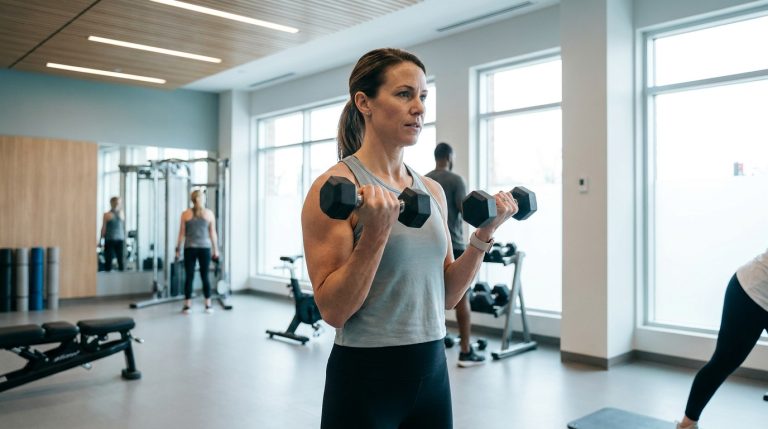
If there is one physiological characteristic consistently associated with healthy aging, it is maintaining lean muscle mass and strength. Muscle influences balance, mobility, independence, glucose regulation, insulin sensitivity, bone health, metabolic rate, recovery from illness, and fall risk.
Beginning in early adulthood, adults gradually lose muscle mass unless it is actively maintained. This age-related loss — known as sarcopenia — accelerates with advancing age. Maintaining muscle through resistance training and adequate protein intake represents one of the most evidence-supported interventions for preserving healthspan.
Strength May Matter More Than Appearance
Many people associate strength training with aesthetics. From a longevity perspective, strength serves a different purpose. Maintaining strength supports climbing stairs, carrying groceries, preventing falls, recovering after illness, and remaining independent. Functional strength is one of the strongest predictors of healthy aging. The goal is not necessarily becoming a bodybuilder — the goal is remaining capable.
Metabolic Health and Aging
Metabolic dysfunction contributes to many chronic diseases associated with aging, including type 2 diabetes, cardiovascular disease, fatty liver disease, obesity, and chronic kidney disease. Maintaining metabolic health involves healthy body composition, stable blood sugar, insulin sensitivity, healthy blood pressure, healthy cholesterol, and regular physical activity.
Many longevity specialists consider metabolic health one of the most modifiable determinants of long-term healthspan.
Cardiovascular Health
Heart disease remains the leading cause of death worldwide. Fortunately, many cardiovascular risk factors are modifiable. Important areas include blood pressure management, lipid optimization, regular physical activity, smoking avoidance, nutrition, weight management, diabetes prevention, and sleep quality.
Improving cardiovascular health supports not only longevity but also cognitive function, kidney health, and physical performance.
Cognitive Health
Living longer has little value if cognitive function declines dramatically. Maintaining brain health involves many of the same behaviors that support cardiovascular health: regular exercise, healthy sleep, blood pressure control, blood sugar management, lifelong learning, social engagement, hearing preservation, and depression treatment when appropriate.
Increasing evidence suggests that “what is good for the heart is often good for the brain.”
Evidence-Based Strategies for Healthy Aging
Prevention Is More Powerful Than Treatment
Traditional medicine frequently reacts to disease after it develops. Longevity medicine asks a different question: “How can we reduce the likelihood that disease develops in the first place?” This proactive approach emphasizes screening, lifestyle optimization, risk factor reduction, early detection, and ongoing reassessment. Preventive medicine often produces its greatest benefits years — or decades — later.
Nutrition for Healthy Aging
Nutrition is one of the few longevity interventions practiced multiple times every day. Despite the continual emergence of new dietary trends, the scientific literature consistently supports several fundamental principles. Rather than asking “What is the perfect diet?”, a more useful question is: “What nutritional pattern can I consistently maintain for the next twenty years?” Long-term consistency almost always outperforms short-term perfection.
Most evidence-supported dietary patterns emphasize:
- Vegetables and fruits
- Lean protein and legumes
- Whole grains when appropriate
- Healthy fats and fiber-rich foods
- Limited ultra-processed foods
- Appropriate calorie intake
Protein: One of the Most Important Nutrients for Healthy Aging
Among all macronutrients, protein deserves particular attention as we age. Beginning in our 30s and accelerating after approximately age 50, adults gradually lose lean muscle mass unless steps are taken to preserve it. Maintaining muscle requires both progressive resistance training and adequate dietary protein.
Insufficient protein intake may contribute to sarcopenia, reduced strength, slower recovery, increased fall risk, and frailty. Although individual requirements vary, many healthy older adults benefit from protein intake that exceeds the traditional Recommended Dietary Allowance (RDA), particularly when combined with regular resistance exercise.
Exercise: The Closest Thing We Have to a Longevity Medication
If exercise could be packaged into a pill, it would likely become one of the most widely prescribed therapies in medicine. Regular physical activity influences nearly every organ system. Benefits include improvements in cardiovascular fitness, blood pressure, blood sugar regulation, insulin sensitivity, bone density, mood, sleep quality, muscle mass, cognitive function, and overall mortality risk.
The Four Pillars of Fitness
A comprehensive exercise program includes more than cardiovascular exercise alone:
- Resistance Training — Helps preserve lean muscle mass, bone density, functional strength, and metabolic health. At LiteWell, resistance training is considered a cornerstone of healthy aging.
- Aerobic Fitness — Walking, cycling, swimming, rowing, hiking, and other aerobic activities support heart health, lung function, endurance, blood pressure, and metabolic function. Current recommendations encourage at least 150 minutes of moderate-intensity aerobic activity per week.
- Balance Training — Falls become increasingly important with advancing age. Balance training through single-leg exercises, Tai Chi, yoga, and functional stability exercises helps reduce fall risk while preserving independence.
- Mobility and Flexibility — Maintaining joint mobility supports comfortable movement, injury prevention, functional independence, and exercise performance.
Sleep: The Foundation of Recovery
Many people think of sleep as passive. In reality, sleep is one of the body’s most active recovery processes. During sleep, the body supports memory consolidation, hormonal regulation, muscle recovery, immune function, tissue repair, emotional regulation, and metabolic health.
Poor sleep has been associated with obesity, insulin resistance, cardiovascular disease, depression, reduced cognitive performance, and increased injury risk. Adults generally benefit from approximately 7–9 hours of quality sleep each night. Persistent sleep problems deserve medical evaluation rather than being accepted as a normal part of aging.
Hormonal Health and Healthy Aging
Hormones influence nearly every aspect of healthy aging. Changes in hormone production occur naturally throughout life. However, significant hormonal deficiencies may contribute to fatigue, brain fog, reduced muscle mass, increased visceral fat, reduced exercise capacity, mood changes, reduced libido, and poor sleep.
Examples include menopause, low testosterone, thyroid disorders, and insulin resistance. Appropriately selected patients may benefit from physician-supervised hormone evaluation and treatment. The goal is not to create “super-physiologic” hormone levels — the goal is restoring healthy physiological function when clinically appropriate.
Body Composition Matters More Than Body Weight
One of the most important shifts occurring in longevity medicine is moving beyond the number on the scale. Two individuals with identical body weight may have dramatically different health risks depending upon their lean muscle mass, visceral fat, bone density, physical fitness, and metabolic health.
For this reason, body composition frequently provides more meaningful information than weight alone. Healthy aging emphasizes preserving muscle, reducing excess visceral fat, and improving physical function — rather than simply reducing total body weight.
Supplements: Separating Evidence From Marketing
The dietary supplement industry is enormous, and many products are marketed with claims of slowing aging or dramatically extending lifespan. Current scientific evidence does not support most of these claims. At LiteWell, our approach is conservative and evidence-based. Supplements should address documented deficiencies, support established health goals, be selected based on evidence rather than marketing, and be reviewed for potential interactions with medications.
GLP-1 Medications and Healthy Aging
GLP-1 receptor agonists have transformed obesity medicine and may influence several factors associated with healthy aging. For appropriate candidates, these medications may improve body weight, visceral fat, blood sugar regulation, insulin resistance, blood pressure, and cardiometabolic risk. However, weight loss alone is not sufficient. LiteWell emphasizes combining GLP-1 therapy, when appropriate, with resistance training, adequate protein intake, regular physical activity, and ongoing nutritional support to improve body composition rather than simply reducing body weight.
Myths vs. Facts
Myth: Longevity medicine is about living forever.
Fact: Longevity medicine focuses on extending healthspan — the years spent healthy, active, and independent — not achieving immortality.
Myth: Genetics determine almost everything about aging.
Fact: Genetics influence longevity, but lifestyle, environment, preventive healthcare, and management of chronic disease substantially affect how healthy we remain throughout life.
Myth: Exercise is primarily for weight loss.
Fact: Exercise supports cardiovascular health, muscle preservation, insulin sensitivity, cognitive function, bone density, mood, and long-term independence — even when body weight changes very little.
Myth: Getting older automatically means becoming weaker.
Fact: Although aging influences muscle mass, resistance training remains highly effective well into later adulthood. Strength, balance, and physical function can improve at nearly every age.
Myth: There is a proven anti-aging supplement.
Fact: At present, no dietary supplement has been conclusively shown to prevent aging or dramatically extend human lifespan. Some supplements may be appropriate for documented deficiencies or specific medical conditions, but lifestyle interventions remain the foundation of healthy aging.
Myth: Longevity medicine is only for older adults.
Fact: The greatest benefits often come from beginning preventive strategies years before chronic disease develops. Healthy aging starts in early and middle adulthood — not at retirement.
Frequently Asked Questions About Longevity Medicine
Q: What is longevity medicine?
Longevity medicine is a preventive, evidence-based approach to helping people remain healthy, active, and independent as they age. The goal is to extend healthspan by optimizing metabolic health, body composition, cardiovascular health, cognitive function, sleep, nutrition, exercise, and other modifiable risk factors.
Q: What is the difference between lifespan and healthspan?
Lifespan is the total number of years a person lives. Healthspan refers to the years lived in good physical, mental, and functional health without significant disability or loss of independence. Longevity medicine emphasizes improving both, with particular focus on healthspan.
Q: Is longevity medicine only for older adults?
No. Many age-related diseases begin developing decades before symptoms appear. Preventive strategies implemented during early and middle adulthood may produce the greatest long-term benefits.
Q: What is the single most important factor for healthy aging?
There is no single intervention. Healthy aging reflects the interaction of many factors including regular exercise, maintaining muscle mass, healthy nutrition, restorative sleep, avoiding tobacco, managing chronic disease, and receiving appropriate preventive medical care.
Q: Why does LiteWell emphasize resistance training?
Loss of muscle mass is associated with frailty, falls, insulin resistance, reduced metabolism, and loss of independence. Resistance training helps preserve lean muscle, bone density, metabolic health, and functional capacity throughout adulthood.
Q: Does body weight accurately reflect health?
Not always. Two people with identical body weight may have very different amounts of muscle, visceral fat, bone density, and metabolic health. Body composition often provides a more meaningful assessment than body weight alone.
Q: Can hormones influence healthy aging?
Yes. Hormones such as estrogen, progesterone, testosterone, thyroid hormones, and insulin influence muscle mass, metabolism, cognitive function, sleep, energy, and body composition. Hormone evaluation may be appropriate for selected patients based on symptoms and medical history.
Q: Are GLP-1 medications considered longevity treatments?
No. GLP-1 medications are not approved as longevity therapies. However, for appropriate patients with obesity or metabolic disease, they may improve body composition and cardiometabolic health when incorporated into a comprehensive physician-supervised treatment program emphasizing muscle preservation, nutrition, and exercise.
Q: Are supplements necessary for healthy aging?
Not necessarily. Most individuals benefit most from a nutritious diet, regular physical activity, healthy sleep, and management of medical conditions. Supplements may be appropriate for documented deficiencies or specific clinical indications, but they should not replace healthy lifestyle habits.
Q: Can cognitive decline be prevented?
No strategy guarantees prevention of cognitive decline. However, maintaining cardiovascular health, exercising regularly, treating hearing loss, controlling blood pressure and diabetes, remaining socially engaged, and staying cognitively active are associated with healthier brain aging.
Q: How does LiteWell approach longevity medicine?
LiteWell emphasizes physician-supervised, evidence-based optimization of metabolic health, body composition, hormonal health when appropriate, sleep, nutrition, exercise, and preventive care. Treatment plans are individualized rather than standardized.
Q: What is the first step at LiteWell?
Patients begin with a Free Medical Fit Call to determine whether LiteWell’s longevity-focused approach aligns with their goals. Those seeking comprehensive evaluation then complete the Premier Discovery Intake, where medical history, lifestyle, laboratory findings (when appropriate), body composition, metabolic health, and individualized treatment strategies are reviewed.
LiteWell’s Clinical Approach to Longevity Medicine
At LiteWell, we believe healthcare should not begin when disease develops. It should begin years — even decades — before chronic disease limits quality of life.
Traditional medicine has accomplished remarkable things. It treats heart attacks, replaces arthritic joints, fights cancer, and manages complex illnesses. Yet much of modern healthcare remains reactive. Patients often enter the healthcare system after diabetes develops — after blood pressure has remained elevated for years, after osteoporosis leads to a fracture, after muscle loss limits mobility, after cognitive decline begins affecting daily life.
Longevity medicine asks a different question: “How can we preserve health before disease develops?”
This shift from reactive medicine to proactive optimization represents the foundation of LiteWell’s philosophy. Our approach focuses on optimizing the physiological systems that consistently influence healthy aging:
- Body composition and muscle preservation
- Cardiovascular health
- Metabolic function
- Hormonal health
- Sleep quality
- Nutrition
- Strength and mobility
- Cognitive performance
- Emotional well-being
Each system influences the others. Improving sleep often improves insulin sensitivity. Improving insulin sensitivity may reduce visceral fat. Reducing visceral fat may improve hormonal balance. Improving hormonal balance often supports muscle maintenance. Maintaining muscle improves metabolic health and preserves independence later in life.
Longevity medicine is therefore not a collection of isolated interventions — it is the coordinated optimization of interconnected physiological systems.
Our goal is simple: help patients remain physically capable, mentally sharp, metabolically healthy, and independent for as many years as possible.
Ready to take a proactive approach to your health? Schedule your Free Medical Fit Call to learn whether LiteWell’s longevity-focused program is right for you. No commitment required — just a conversation about your goals.
Related LiteWell Services
- Longevity & Performance Medicine
- Medical Weight Loss
- HRT for Women
- TRT for Men
- Free Medical Fit Call
- Premier Discovery Intake
References
- American College of Lifestyle Medicine (ACLM)
- American Heart Association (AHA)
- American Diabetes Association (ADA) Standards of Care
- National Institute on Aging (NIA)
- National Institutes of Health (NIH)
- U.S. Preventive Services Task Force (USPSTF)
- World Health Organization (WHO) Healthy Ageing Framework
- Peer-reviewed publications from The New England Journal of Medicine, JAMA, The Lancet, Nature Aging, Nature Reviews Endocrinology, Circulation, and Cell
Medical Disclaimer: This article is provided for educational purposes only and should not be interpreted as individualized medical advice. Recommendations regarding nutrition, exercise, hormone therapy, medications, supplements, or longevity interventions should be individualized by a licensed healthcare professional based on medical history, current health status, and personal goals. LiteWell does not provide emergency medical care.